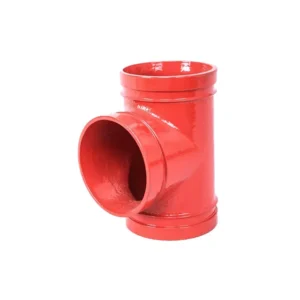
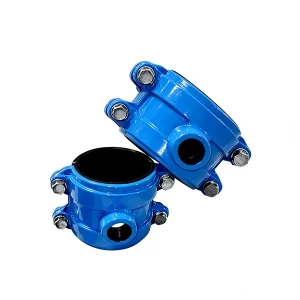
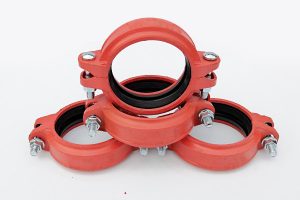
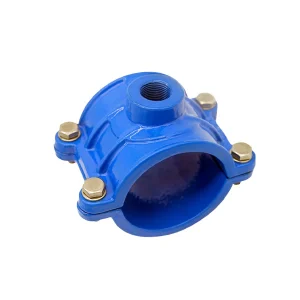
Grooved pipe fittings and pipe saddle clamp solutions are essential in modern piping systems. When it comes to press-type connections, understanding the difference between single-press and double-press fittings ensures reliable, leak-free performance.
🔧 Single-Press Fittings
Normally watertight under standard use, but prone to leakage if loosened.
Pull-out resistance >3.0 MPa prevents rotation-induced leakage during service.
Single-sided sealing ring in single-press stainless steel offers uneven pressure distribution, making the seal more likely to extrude.
Double-press fittings provide 1.8 times higher pull-out resistance than single-press types.
💧 Double-Press Fittings
Even under destructive conditions, double-press fittings remain leak-free. They feature a “five no-leak” interface technology with the following performance advantages:
No leakage under twisting movement
Fixed joint rotated 30° → no leakage
Pressed joint rotated 720° → no leakage
Dual extrusion seals ensure even left/right compression, preventing the seal from being squeezed out by water pressure.
No leakage when flattened
Flattening rate 70–80% (excluding joints with rigidity >5× pipe stiffness) → no leakage.
No leakage under strong vibration
Vibration amplitude: ±5 mm, frequency: 600–1400 cycles/min
Internal water pressure: 2.5 MPa, tested for 3 million cycles → no leakage.
No leakage under pull-out movement
0.5–1 mm pull-out automatically self-resets
Joint separation 3–8 mm → pull-out resistance >6.0 MPa, fixed elongation ≤15% → no leakage.
No leakage under bending deformation
Bending angle α ≤30°, pipe opening gap β ≤2 mm → no leakage.
For other connection solutions like grooved pipe fittings and pipe saddle clamp products, please contact our team for customized support.