If you look at older water supply systems, especially in small towns and rural areas, you’ll often find dead-end pipelines. These systems are simple and inexpensive to build, but they create several operational challenges over time.
For this reason, most modern municipal water distribution systems are designed as looped networks whenever possible.
What Is a Dead-End Network?
A dead-end network is exactly what it sounds like. Water flows through a main pipe and then into smaller branch lines that stop at the end.
Because water can only move in one direction, the last section of the pipe often experiences very little flow, especially in areas with low water demand.
This design reduces construction costs, but it can also create maintenance issues.
The Problem of Water Stagnation
One of the biggest disadvantages of a dead-end system is water stagnation.
When water remains in a pipeline for long periods, several problems can occur:
- Loss of disinfectant residual
- Sediment buildup
- Unpleasant taste or odor
- Increased flushing requirements
Municipal utilities often need to flush dead-end sections regularly to maintain water quality.
In a looped network, water can circulate through multiple paths, helping prevent these issues.
Better Reliability During Repairs
Imagine a water main break in a dead-end system.
Everything downstream from the damaged section may lose service until repairs are completed.
A looped network works differently.
Because water can reach customers from more than one direction, utilities can often isolate a damaged section while maintaining service to nearby areas.
This is one of the main reasons looped systems are preferred in urban environments.
More Stable Pressure
Pressure fluctuations are another concern in distribution networks.
In a dead-end layout, customers at the far end of the system may experience lower pressure during periods of high demand.
Looped systems distribute flow through multiple routes, which helps balance pressure across the network.
For firefighting applications, this pressure stability can be especially important.
Easier Network Expansion
Cities rarely stay the same size.
As new residential areas, commercial buildings, and industrial facilities are added, the distribution network must expand.
New branch connections are often required to connect additional service lines.
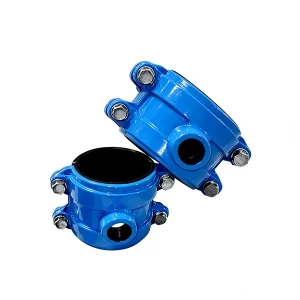
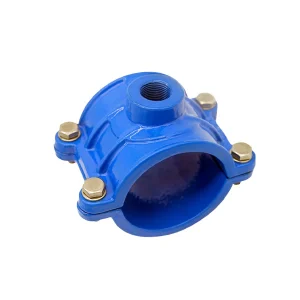
In many projects, a pipe saddle clamp provides a practical way to add branch outlets on an existing pipeline without replacing long sections of pipe.
For municipal service connections, a saddle clamp for water line installation is commonly used when extending water supply to new customers.
Are Dead-End Systems Still Used?
Yes.
Dead-end systems are still common in:
- Rural communities
- Small developments
- Temporary construction projects
- Areas with limited budgets
In these situations, the lower installation cost may outweigh the operational disadvantages.
However, for larger municipal systems, engineers generally favor looped networks because they provide better water quality, reliability, and long-term performance.
Conclusion
Dead-end networks are simple and economical, but they can lead to stagnation, lower reliability, and higher maintenance requirements.
Looped systems require more piping and a larger initial investment, yet they offer better circulation, more stable pressure, and improved service continuity.
That is why most modern water distribution systems are designed with looped networks whenever practical.