Water distribution systems are designed to deliver treated water from reservoirs and treatment facilities to residential, commercial, and industrial users. Two of the most common network layouts are the dead-end system and the looped system.
Understanding the differences between these configurations helps engineers select the most suitable design based on cost, reliability, maintenance requirements, and future expansion plans.
What Is a Dead-End Water Distribution System?
A dead-end system, also known as a tree system, consists of a main pipeline with branch lines that terminate at their ends.
Water flows through a single path, and there is no closed loop within the network.
Typical Characteristics
- Simple network layout
- Single flow direction
- Lower construction cost
- Common in rural and small community projects
Advantages of a Dead-End System
Lower Initial Cost
Fewer pipes and fittings are required compared with looped systems.
Easier Design
The layout is straightforward and easy to construct.
Suitable for Small Networks
Dead-end systems are commonly used in:
- Rural communities
- Small residential developments
- Temporary utility projects
Disadvantages of a Dead-End System
Water Stagnation
Low flow conditions can occur at pipe ends.
Sediment Accumulation
Particles may settle in areas with limited circulation.
Reduced Reliability
If a main pipeline fails, downstream users may lose water service.
Increased Maintenance
Periodic flushing is often required to maintain water quality.
What Is a Looped Water Distribution System?
A looped system forms interconnected circuits, allowing water to reach consumers through multiple flow paths.
Typical Characteristics
- Multiple flow directions
- Improved circulation
- Better pressure distribution
- Higher reliability
Advantages of a Looped System
Better Water Quality
Continuous circulation reduces the risk of stagnation.
Improved Reliability
If one section is isolated for maintenance, water can often reach users through another route.
Better Pressure Distribution
Flow can be balanced throughout the network.
Disadvantages of a Looped System
Higher Construction Cost
Additional piping and fittings increase project costs.
More Complex Design
Engineering and hydraulic calculations are typically more involved.
Branch Connections in Water Distribution Systems
Regardless of network type, branch connections are often required when:
- Expanding service areas
- Adding new customers
- Installing irrigation systems
- Connecting industrial facilities
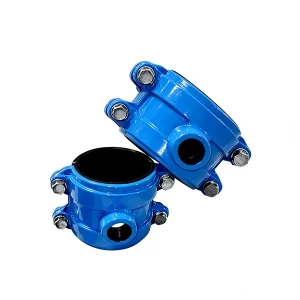
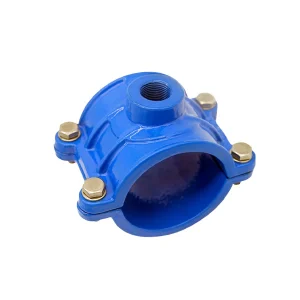
In many projects, a pipe saddle clamp is used to create branch outlets on existing pipelines without replacing large sections of pipe.
Water Service Line Expansion
When extending municipal networks or connecting new buildings, a saddle clamp for water line installation can provide a practical branch connection solution.
These fittings are commonly used for:
- Utility service connections
- Residential water supply
- Irrigation networks
- Infrastructure upgrades
Related Piping Components
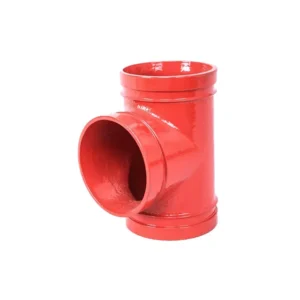
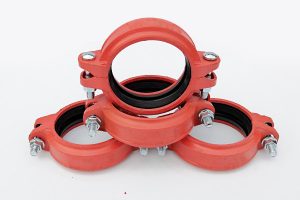
Water treatment plants, pump stations, and industrial facilities often utilize grooved pipe fittings because they simplify installation and maintenance while providing reliable mechanical connections.
Conclusion
Dead-end and looped water distribution systems each have advantages and limitations. Dead-end systems offer lower construction costs and simple layouts, while looped systems provide better reliability, circulation, and water quality. The appropriate choice depends on project requirements, budget, and long-term operational goals.