When people think about pipeline performance, they usually focus on pipe material, pressure rating, or installation quality.
However, in real water distribution systems, water quality itself often determines how long a pipeline will remain reliable.
Two systems built with the same pipe material can show very different maintenance histories simply because the operating water conditions are different.
Factors such as pH, sediment content, disinfectant levels, and flow conditions all influence long-term performance.
Why Water Quality Matters
Water is not only transported by pipelines—it continuously interacts with them.
Over time, this interaction affects:
- Internal pipe condition
- Hydraulic efficiency
- Leak probability
- Maintenance frequency
- Expected service life
Small changes that appear insignificant during installation may become noticeable after years of operation.
pH and Corrosion
One of the most closely monitored indicators is pH.
When water becomes excessively acidic, corrosion rates may increase.
Possible consequences include:
- Surface deterioration
- Reduced wall thickness
- Joint degradation
- Higher repair frequency
At the same time, extremely alkaline conditions may create mineral deposits that reduce internal flow area.
Water treatment programs attempt to maintain balance rather than simply targeting the highest or lowest pH.
Sediment and Low Flow Areas
Water movement also affects pipeline condition.
Areas with low circulation can experience:
- Sediment accumulation
- Reduced disinfectant effectiveness
- Localized maintenance issues
Dead-end sections of distribution networks are especially sensitive because water exchange may occur less frequently.
For this reason, many municipalities schedule routine flushing.
Flow Velocity and Long-Term Stability
Flow conditions influence how water interacts with the pipe wall.
Very low velocities may allow particles to settle.
Very high velocities may increase wear and create unnecessary pressure loss.
Design engineers attempt to maintain flow conditions that support both operational efficiency and long-term durability.
Network Expansion and Connection Points
As distribution networks expand, utilities frequently add new service connections and branch outlets.
Connection quality becomes increasingly important because these locations are often subject to repeated operational stress.
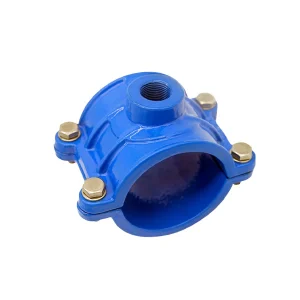
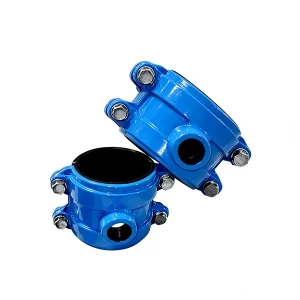
In many projects, a pipe saddle clamp provides a practical solution for creating branch outlets on existing pipelines while reducing installation disruption.
Maintenance Is Usually More Important Than Material Alone
Many pipeline failures are not caused by material defects.
More often, issues develop from:
- Inadequate flushing
- Poor water chemistry control
- Pressure fluctuations
- Delayed maintenance
A well-maintained distribution system can often achieve reliable operation over long service periods.
Conclusion
Water distribution performance depends on more than pipe selection.
Water quality, circulation, maintenance practices, and operating conditions all contribute to pipeline service life.
Understanding these factors helps utilities improve reliability while reducing long-term operating costs.