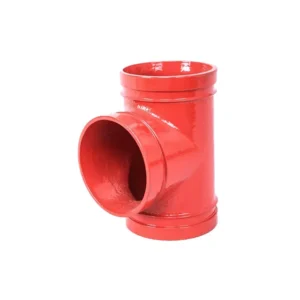
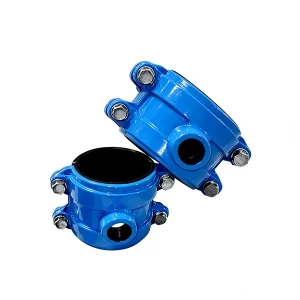
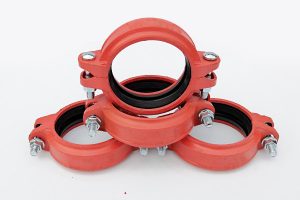
Selecting the correct pipe saddle clamp begins with one critical measurement: the pipe outside diameter (OD).
Many installation issues occur because installers rely on nominal pipe size (NPS) rather than the actual outside diameter. Understanding the difference helps ensure proper fit, sealing performance, and long-term reliability.
A correctly sized pipe saddle clamp provides secure branch outlet connections for industrial, water distribution, HVAC, and fire protection systems.
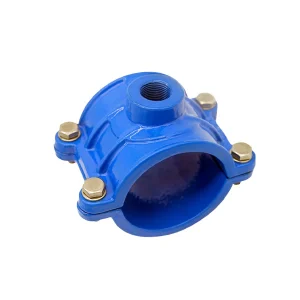
What Is Pipe Outside Diameter (OD)?
Pipe outside diameter (OD) refers to the actual external diameter of the pipe.
It is one of the most important dimensions when selecting:
- Pipe saddle clamps
- Grooved couplings
- Mechanical tees
- Repair clamps
- Branch outlet fittings
A mismatch between the pipe OD and the clamp size may affect sealing performance and installation quality.
Why Nominal Pipe Size Is Not Enough
Many people assume that a pipe labeled as “4 inch” has an actual outside diameter of 4 inches.
However, in most piping standards:
- Nominal Pipe Size (NPS) is a designation
- Actual Outside Diameter (OD) is a fixed dimension
For example:
| Nominal Size | Actual OD |
|---|---|
| 2″ | 2.375″ (60.3 mm) |
| 3″ | 3.500″ (88.9 mm) |
| 4″ | 4.500″ (114.3 mm) |
| 6″ | 6.625″ (168.3 mm) |
Always verify the actual OD before selecting a saddle clamp.
Methods for Measuring Pipe OD
Method 1: Using a Caliper
A digital caliper provides the most accurate measurement.
Steps:
- Clean the pipe surface.
- Place the caliper around the pipe.
- Measure the widest outside dimension.
- Record the result in millimeters or inches.
Method 2: Using a Flexible Measuring Tape
For larger pipes, a flexible tape measure can be used.
Steps:
- Measure the pipe circumference.
- Divide the circumference by 3.1416.
- The result is the outside diameter.
Formula:
OD = Circumference ÷ π
Method 3: Check Existing Drawings
Engineering drawings, specifications, or pipeline records often contain pipe dimensions.
However, field verification is still recommended before installation.
Common Measurement Mistakes
Several errors may lead to incorrect saddle clamp selection:
Measuring Corroded Surfaces
Heavy corrosion can affect accuracy.
Confusing OD with Pipe ID
Inside diameter (ID) should not be used for saddle clamp selection.
Assuming All Standards Are Identical
Different pipe standards may have different dimensions.
Measuring Over Coatings
Thick coatings or insulation should not be included in the OD measurement.
Why Accurate OD Measurement Matters
Correct OD measurement helps ensure:
- Proper saddle clamp fit
- Reliable gasket sealing
- Correct outlet alignment
- Easier installation
- Reduced maintenance issues
Accurate sizing also helps prevent unnecessary product replacement and installation delays.
Applications in Water Distribution and Fire Protection Systems
Pipe saddle clamps are commonly used for:
- Water distribution branches
- Fire sprinkler connections
- HVAC expansion lines
- Industrial process piping
- Equipment connection points
In these applications, correct sizing is essential for long-term performance.
Compatibility with Grooved Piping Systems
Pipe saddle clamps are often used together with grooved pipe fittings in industrial and commercial piping systems.
Proper pipe dimension verification helps ensure compatibility between all piping components.
Industrial Manufacturing Support
Working with a professional grooved pipe fittings manufacturer and factory in China can help ensure accurate specifications, quality control, and technical support.
Conclusion
Accurate pipe outside diameter measurement is one of the most important steps when selecting a pipe saddle clamp.
Understanding the difference between nominal pipe size and actual OD helps improve installation accuracy, sealing reliability, and long-term piping system performance.