Pipe sizing terminology can sometimes be confusing, especially when terms such as Nominal Bore (NB) and Outside Diameter (OD) are used interchangeably.
However, these two dimensions represent different concepts and play different roles in pipe selection and piping system design.
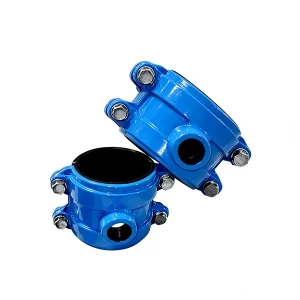
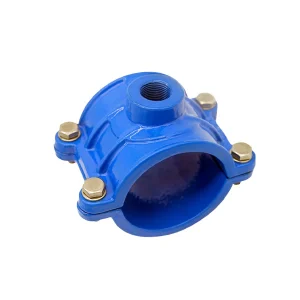
Understanding the difference is important when selecting branch connection components such as a pipe saddle clamp, where accurate pipe dimensions directly affect installation quality and sealing performance.
What Is Nominal Bore (NB)?
Nominal Bore (NB) is a standardized designation used to identify pipe sizes.
It is not the actual measured diameter of the pipe.
Instead, it serves as a convenient reference size used throughout the piping industry.
Examples include:
| Nominal Bore | Common Inch Size |
|---|---|
| NB 25 | 1″ |
| NB 50 | 2″ |
| NB 80 | 3″ |
| NB 100 | 4″ |
NB helps engineers and contractors identify compatible piping components.
What Is Outside Diameter (OD)?
Outside Diameter (OD) refers to the actual physical diameter measured across the outer surface of a pipe.
Unlike NB, OD is a precise dimension.
Examples:
| Nominal Bore | Actual Outside Diameter |
|---|---|
| NB 50 | 60.3 mm |
| NB 80 | 88.9 mm |
| NB 100 | 114.3 mm |
| NB 150 | 168.3 mm |
OD is the dimension commonly used when selecting fittings, couplings, and branch connection products.
Why NB and OD Are Different
Historically, nominal pipe sizing was developed to simplify pipe identification.
As manufacturing standards evolved and wall thickness options increased, the actual outside diameter remained fixed while internal dimensions changed.
As a result:
- NB became a designation
- OD became the actual measured dimension
This explains why a “4-inch pipe” does not actually measure 4 inches across the outside.
Why OD Matters for Pipe Saddle Clamp Selection
Pipe saddle clamps are designed to fit specific pipe outside diameters.
Selecting a saddle clamp based only on nominal size may result in:
- Improper fit
- Poor gasket compression
- Leakage risks
- Installation difficulties
Therefore, installers should always verify the actual OD before selecting a saddle clamp.
A correctly sized pipe saddle clamp helps ensure reliable branch outlet connections and long-term operational performance.
Common Mistakes When Measuring Pipes
Several sizing mistakes occur frequently in piping projects.
Confusing NB with OD
The most common error is assuming the nominal size equals the actual diameter.
Ignoring Pipe Standards
Different standards may have different dimensional requirements.
Measuring Over Coatings
Protective coatings should not be included when determining pipe OD.
Using Inside Diameter Instead of Outside Diameter
Many fittings and clamps are selected according to OD rather than ID.
Applications in Industrial Piping Systems
Accurate pipe sizing is essential in:
- Water distribution systems
- HVAC installations
- Fire protection piping
- Industrial process pipelines
- Retrofit projects
Correct dimension verification helps ensure compatibility between all piping components.
Relationship with Grooved Pipe Fittings
Many piping products are selected according to the pipe outside diameter.
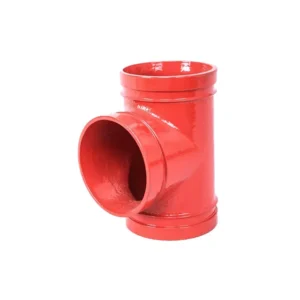
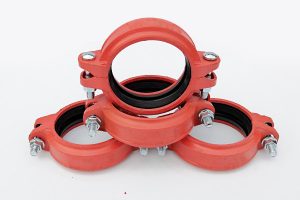
This includes grooved pipe fittings, couplings, mechanical tees, and branch outlet components.
Understanding OD requirements helps improve installation accuracy and system reliability.
Working with a Reliable Manufacturer
For industrial projects, accurate dimensional control is essential.
Working with a professional grooved pipe fittings manufacturer and supplier in China helps ensure product consistency and technical support.
Conclusion
Although Nominal Bore and Outside Diameter are related, they are not the same measurement.
NB serves as a standardized size designation, while OD represents the actual measured diameter of the pipe.
Understanding this difference helps engineers, contractors, and installers select the correct fittings, saddle clamps, and piping components for reliable system performance.