How to choose grooved coupling
Choosing the right grooved coupling is essential for ensuring the safety, reliability, and long-term performance of a piping system.
Different applications require different coupling types, materials, and performance characteristics.
This guide explains the key factors to consider when selecting a grooved coupling for fire protection, HVAC, water supply, and industrial piping systems.
For product details, see our grooved pipe fittings solutions.
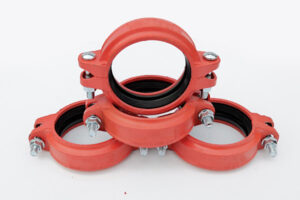
1. Understand the Application Requirements
Before selecting a grooved coupling, clearly define the application conditions:
System type (fire protection, HVAC, industrial piping, water supply)
Working pressure and temperature
Pipe material and size
Environmental conditions (indoor, outdoor, vibration, seismic areas)
For example, fire protection systems typically require certified grooved couplings that meet UL or FM standards, while HVAC systems may prioritize vibration absorption.
2. Choose Between Rigid and Flexible Grooved Couplings
3. Select the Correct Pipe Size and Groove Dimensions
One of the most important decisions is selecting the correct coupling type.
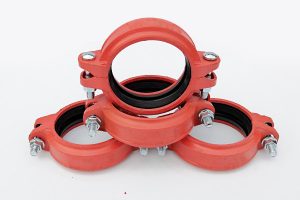
Rigid Grooved Couplings
Rigid grooved couplings are designed to maintain pipe alignment and restrict axial and angular movement.
They are commonly used in straight pipe runs where system rigidity and precise alignment are required.
Flexible Grooved Couplings
Flexible grooved couplings allow controlled movement to absorb vibration, thermal expansion, and minor misalignment.
They are recommended for pump connections, equipment connections, and areas subject to movement or seismic activity.
Grooved couplings must match the pipe outer diameter and groove specifications precisely.
When choosing a grooved coupling, ensure:
The coupling size matches the pipe nominal diameter
The groove dimensions comply with standard grooving specifications
The coupling housing fully engages with the pipe grooves
Incorrect groove dimensions or size mismatches can lead to leakage or connection failure.
4. Consider Pressure Rating and Working Conditions
Each grooved coupling is designed for a specific pressure range.
Key factors to evaluate:
Maximum working pressure of the system
Pressure fluctuations during operation
Safety margin required by local codes or project specifications
Always select a grooved coupling with a pressure rating that meets or exceeds system requirements.
5. Choose Suitable Gasket Materials
The gasket plays a critical role in sealing performance.
Common gasket materials include:
EPDM – Suitable for water, air, and many HVAC applications
NBR – Suitable for oil, fuel, and certain industrial fluids
Selecting the correct gasket material ensures long-term sealing reliability and chemical compatibility.
6. Verify Compliance with Standards and Certifications
For many projects, grooved couplings must comply with international or regional standards.
Typical standards include:
UL and FM approvals for fire protection systems
Relevant ANSI, ISO, or EN standards depending on the market
Always confirm certification requirements during the selection process to avoid project delays or compliance issues.
7. Evaluate Installation and Maintenance Requirements
Ease of installation and future maintenance should be considered when choosing grooved couplings.
Well-designed grooved couplings offer:
Fast installation without welding or threading
Easy disassembly for inspection or system modification
Reduced labor costs and downtime
Proper installation practices are essential to achieve optimal performance.
8. Choose a Reliable Grooved Coupling Supplier
Beyond product specifications, selecting a reliable supplier is equally important.
A professional grooved coupling supplier should provide:
Clear technical documentation
Consistent product quality
Support for project selection and installation guidance
👉 For detailed product specifications and available models, please visit our
Grooved Coupling Products page.